
Call Us
+91-981-164-4688 
You have a space — a school corner, a mall floor, a daycare room, or a full venue. And you want to turn it into something kids run toward the moment they walk in.
So you start searching for the right soft play equipment for kids. Dozens of vendors appear. Half of them haven’t even asked about your space before sending a quote. It feels less like guidance and more like a sales push.
That’s exactly why this guide exists. We’ve spent years around this industry — visiting factories, seeing real installations, talking to the people who actually run these play zones. The one thing that kept standing out was simple: the best decisions came from people who understood the product, not people who were just trying to sell it.
We don’t sell you — we guide you with real, on-ground experience. And after years in this field, the company we found ourselves recommending most was Maskeen Toys. Not for what they pitch, but for what they’ve built.
— The thinking behind this guide
This guide covers everything — what soft play equipment for kids actually is, how to pick the right manufacturer, what it costs, and what questions to ask before you spend a single rupee.
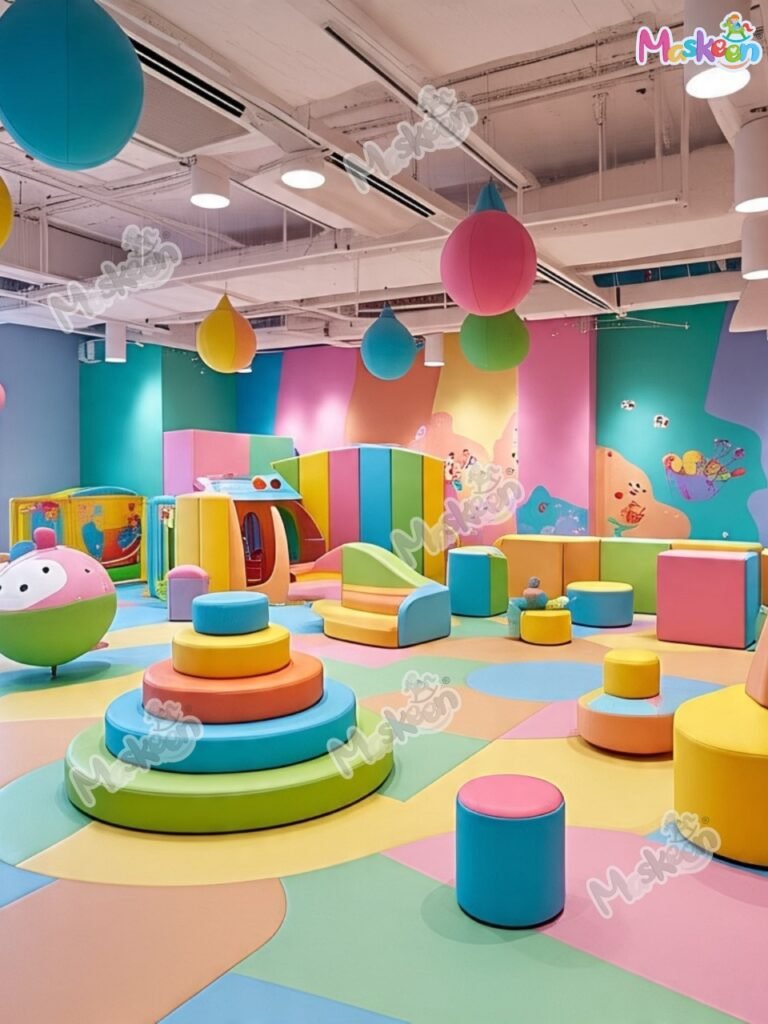
Soft play equipment for kids refers to padded, foam-covered play structures designed for young children — typically ages 1 to 10. Every element is made from soft, impact-absorbent materials so kids can climb, jump, slide, and tumble without the risk of serious injury.
A well-designed soft play zone typically includes:
Unlike traditional metal playground equipment, kids’ soft play equipment is built for indoor use and is especially suitable for toddlers who are still developing their balance and coordination.
Pediatric experts consistently recommend unstructured physical play in safe environments as one of the most important activities for children under age 7. Soft play areas are purpose-built for exactly this kind of play.
This question comes up a lot — especially for schools and residential societies trying to plan their spaces. Here’s a clear side-by-side breakdown:
Feature | Indoor playground | Outdoor playground |
Weather dependency | None — usable year-round | Limited by heat, rain, dust |
Material | Foam, fabric, PVC, soft vinyl | Metal, wood, plastic, rubber |
Age group | Best for toddlers (1–8 yrs) | Wider range (3–14 yrs) |
Maintenance | Regular cleaning, foam checks | Rust treatment, repainting |
Safety level | Very high (soft surfaces) | Moderate (hard surfaces below) |
Customization | High — themes, sizes, layouts | Moderate |
Commercial use | Malls, schools, hotels, daycares | Parks, societies, schools |
For commercial purposes — like a mall, a family entertainment center, or a kids’ café — an indoor playground is almost always the better investment. It runs 365 days a year, through Delhi’s brutal summers and monsoon months alike.
Not all manufacturers are equal. Here’s what separates a reliable indoor playground manufacturer from someone just selling coloured foam online.
Ask how long they’ve been in this business. Have they supplied to schools, malls, resorts, or hospitals? Can they show you installed projects in real locations you can actually visit? A manufacturer with 37+ years in the field will have answers ready — a new vendor won’t.
Good commercial soft play equipment uses high-density foam that doesn’t compress within months, non-toxic PVC or vinyl covers that are easy to clean, and powder-coated steel frames that stay firm. Always ask about foam density ratings and whether the PVC is anti-bacterial and child-safe.
Any serious children’s soft play equipment supplier should follow EN-1176 (European playground safety standards) or BIS guidelines for Indian manufacturers. If they can’t speak to safety certifications clearly, walk away.
Every space is different. A 500 sq. ft. school corner needs a completely different layout than a 3,000 sq. ft. mall anchor zone. Look for a play area fabricator with an in-house design team that works directly with your floor plan — not just off-the-shelf catalog pieces.
This is where most vendors fall short. What happens when a foam panel tears after six months? Who replaces it, and how quickly? Make sure there’s a clear warranty policy and a responsive local service team before you sign anything.
When you’re searching for quality soft play equipment for kids in Delhi backed by a real body of work, Maskeen Toys is a name that keeps coming up — and for good reason.
With 37+ years of experience in the children’s play equipment industry, Maskeen Toys has designed and installed play zones across schools, malls, hospitals, resorts, daycare centers, and family entertainment venues all over India. That kind of experience doesn’t just mean they know how to build things — it means they’ve already solved problems you haven’t encountered yet.
Their range covers everything from toddler soft play equipment for nurseries and crèches, to large-scale high-quality soft play structures for commercial FEC installations. They work with you from design to installation to maintenance — not just hand over a box of parts and disappear.
Maskeen Toys has equipped play zones for some of the most recognised names in retail, hospitality, and education across India. Their installations are built to last — not just to look good on launch day.
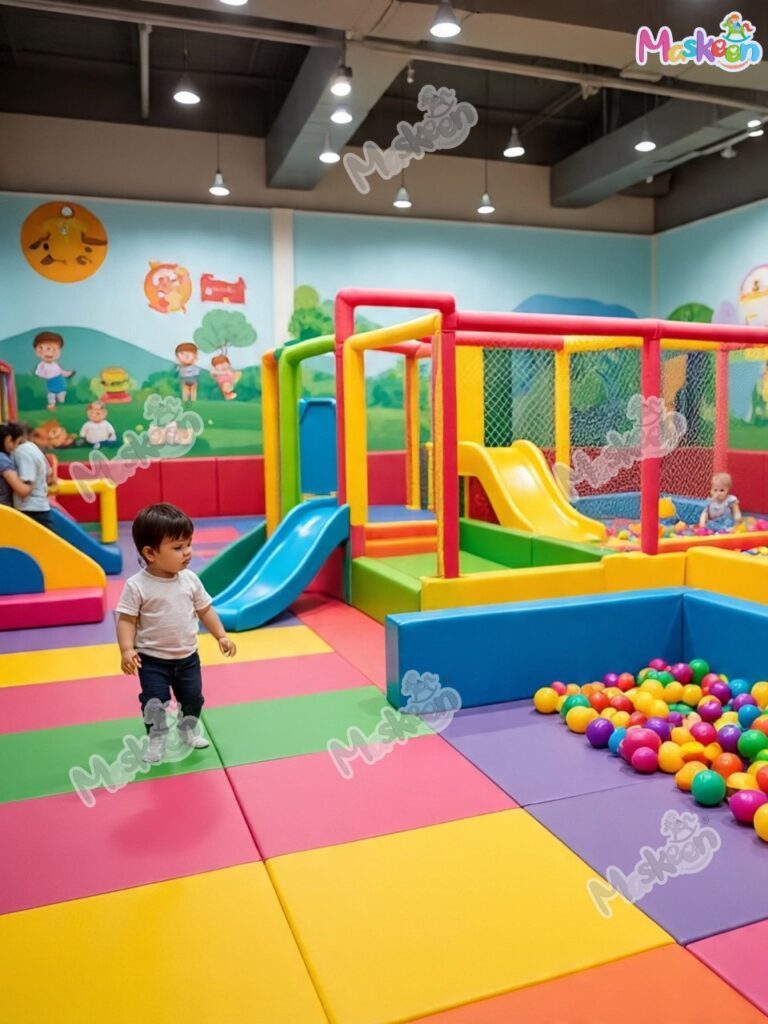
Designed for very young children still developing motor skills. Features include low-height climbing frames, wide tunnels, soft ball pits, and sensory play panels. Ideal for nurseries, crèches, and hospital waiting areas.
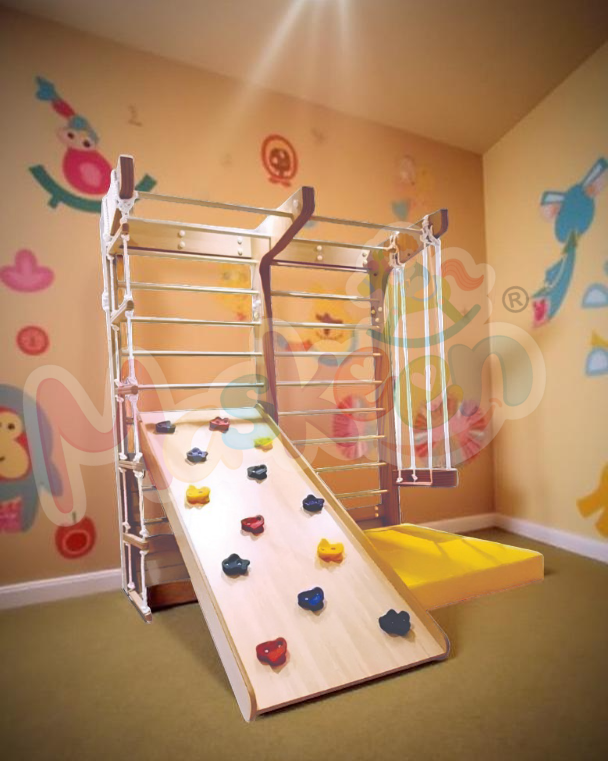
Slightly more complex structures — mini slides, stepping stones, balance beams — that challenge coordination while remaining completely safe. Works beautifully in school play corners and playgroups.
Multi-level themed structures designed for high-footfall commercial settings. Jungle gyms with slides, obstacle courses, role-play towns, and interactive game walls — built with industrial-grade materials to handle hundreds of kids per day.
For entertainment-focused venues — trampoline zones, climbing walls, foam pits, laser mazes, interactive digital floors. These premium installations become the centrepiece of any venue and are a major draw for families.
Soft play equipment for kids is generally designed for ages 1 to 10. Toddler-specific zones cater to ages 1–4, while larger multi-level structures work well for kids up to 10–12. In commercial setups, always keep the toddler zone physically separated from older kids’ areas for both safety and experience.
Yes — when designed specifically for that age. Equipment for children under 2 should have very low heights, no small parts, wide non-slip foam surfaces, and parental supervision at all times. Reputable manufacturers like Maskeen Toys have dedicated infant-safe product lines built specifically for this age group.
With good materials and regular maintenance, soft play equipment typically lasts 7–12 years in commercial settings. Foam padding is usually the first to show wear. Annual inspections and timely foam replacement can significantly extend the life of your installation.
Absolutely. A good play area fabricator will work with your floor plan, ceiling height, age group, and budget before designing anything. You should be able to choose the theme, colours, and play elements — and always ask for a 3D layout before manufacturing begins so there are no surprises on installation day.
In India, BIS provides guidelines for children’s play equipment. Most quality manufacturers also follow EN-1176 — the European standard for playground safety. Always ask your children soft play equipment supplier for written safety compliance documentation before placing an order. If they hesitate, that’s a red flag.
A basic toddler corner fits in 150–200 sq. ft. A mid-size indoor playground with multiple elements typically needs 500–1,000 sq. ft. For a commercial-grade play zone built for significant footfall, plan for at least 1,500 sq. ft. — and always check ceiling height too.
Yes — Delhi and NCR have a large and growing market for family entertainment. A well-located soft play center generates steady revenue through entry fees, birthday packages, and school group bookings. Most operators break even within 18–30 months with the right location and pricing model.
Daily wipe-down with child-safe disinfectant is a must. Weekly checks on foam panels, vinyl covers, and structural joints help catch issues early. A professional inspection once a year is recommended for commercial setups. Ask your manufacturer if they offer an annual maintenance contract — it saves a lot of trouble later.
Yes — both are growing segments. Schools use indoor play equipment for toddlers as part of early childhood development programs. Hospitals install soft play zones in pediatric wards to ease anxiety in young patients. Both settings need commercial-grade, easy-to-sanitize, non-toxic equipment from an experienced manufacturer.
Look for five things: real installed projects you can visit, clear material specs and safety certifications, an in-house design team, transparent itemised pricing, and a proper warranty with after-sales support. Never shortlist on price alone — cheap equipment that fails in a year costs far more than high-quality soft play structures built to last a decade.
Whether you’re setting up a small toddler corner or a full-scale kids amusement play equipment zone, the manufacturer you choose will determine how the space looks, how safely it runs, how long it lasts, and what it costs you over its lifetime.
Delhi has no shortage of vendors. But when it comes to genuinely good soft play equipment for kids — backed by real experience, strong design capability, and long-term service commitment — Maskeen Toys is a name worth shortlisting. With 37+ years in this field and installations across the country, they bring practical knowledge that newer vendors simply don’t have.
Whether you need commercial soft play equipment for a mall, indoor play equipment for toddlers in a school, or a custom kids’ play zone for a resort — reach out, share your space details, and get a proper walkthrough of what’s possible.
Soft Play Equipment for Kids Indoor Playground Manufacturer Toddler Soft Play Equipment Commercial Soft Play Equipment Kids Amusement Play Equipment Play Area Fabricator High-Quality Soft Play Structures
